
Live Casino Infrastructuren: How Game Control Units Keep Tables Connected
A live casino table may look simple from the player’s side. There is a dealer, a roulette wheel or deck of cards, a video stream, betting controls, and a results panel. Behind that clean interface, however, several technical systems have to communicate almost instantly.
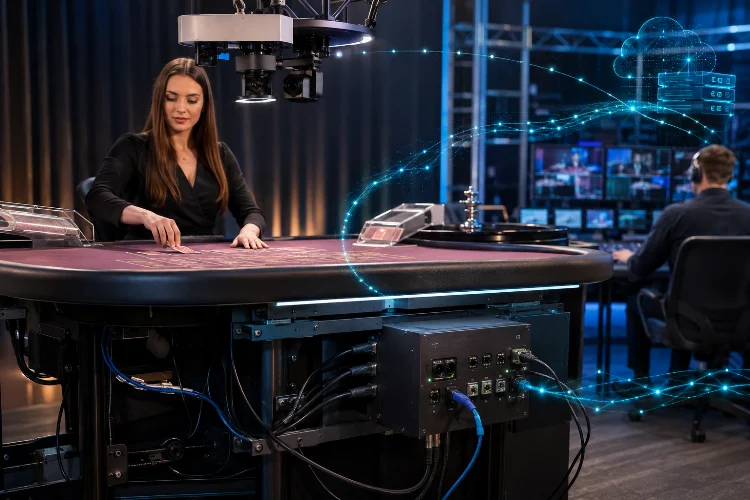
One of the less visible components within Live Casino Infrastructuren is the Game Control Unit, usually shortened to GCU. Industry descriptions commonly present the GCU as hardware linked to an operating table that helps encode or relay information from the physical game into the online environment. It works alongside cameras, game-recognition technology, dealer interfaces, streaming systems, and backend software.
Understanding the GCU helps explain how a physical casino event becomes a synchronised digital game.
What Exactly Is a Game Control Unit?
A Game Control Unit can be thought of as one of the technical bridges between the physical studio and the online gaming platform.
Industry explanations describe GCUs as devices associated with individual live tables. They can help encode information generated during the game and make that information available to the software responsible for presenting the event to remote players.
The exact architecture can vary between providers, so a GCU should not be treated as one universally standardised box with an identical specification everywhere.
Its broader purpose is easier to understand: the physical action occurring at the table must become structured digital information quickly enough for the betting interface, results system, and video presentation to remain aligned.
That seemingly simple job involves considerable sychronisation.
Turning Physical Table Events Into Digital Data
Consider a live blackjack table.
A dealer physically deals cards, but an online platform also needs to know which cards appeared, which hand they belong to, when player decisions are permitted, and when the round has finished.
Technology such as optical recognition, scanners, sensors, and dealer-controlled interfaces can translate physical game events into machine-readable information. Industry descriptions of GCU-based live casino setups explain that this information is then processed so the player’s digital interface can reflect what happened at the real table.
Roulette presents a similar challenge.
The camera shows the wheel spinning, but the digital system also needs a reliable representation of the winning number so bets can be evaluated correctly. That game-state information must correspond with the physical result visible on the broadcast.
The GCU forms part of the chain connecting those two worlds.
Why Video and Game Data Must Stay Synchronized
Video alone is not enough to operate an interactive live casino.
A player needs to see the dealer while also receiving betting windows, card values, roulette outcomes, balance updates, and other interface information. If those elements become noticeably misaligned, the experience can become confusing.
This means the video stream and structured game data must travel through related but coordinated workflows.
Industry explanations commonly describe the GCU as working alongside recognition technology and the live broadcast so physical events can be reflected digitally in near real time.
For example, imagine the video showing a roulette ball landing while the betting interface still appears to accept wagers.
That would create an obvious operational problem.
Good infrastructure therefore needs clear round-state management: bets open, bets close, the event happens, the outcome is captured, results are processed, and the next round begins.
The GCU helps support this transition between physical and digital states.
The GCU Is Only One Layer of the Infrastructure
Calling the GCU the “brain” of a live table is a useful metaphor, but the complete infrastructure is much larger.
A professional system can involve studio cameras, microphones, lighting, recognition equipment, dealer monitors, network connections, video encoders, application servers, databases, operator platforms, and player-facing software.
Independent laboratory GLI says its live dealer evaluations cover technical systems as well as synchronicity, staffing, premises, and operational responsibility. That illustrates how live dealer reliability depends on far more than one device.
The GCU therefore works as part of an ecosystem.
If the physical table reports the right result but the network layer is unstable, players can still experience disruption. If the video remains smooth but the game-state information is wrong, the table can still fail operationally.
Strong Live Casino Infrastructuren depends on these components working together rather than independently.
Supporting the Dealer Without Replacing the Dealer
The dealer remains central to a live casino game.
They operate the physical table, manage the pace of the round, and interact with players. Technology provides the digital framework around those actions.
Industry descriptions of live studio systems mention dealer monitors that can display information such as betting status and connected players, while GCUs and related recognition systems handle structured game information.
This division of labour is important.
The dealer does not need to manually type every card value or roulette outcome into a public interface. Automated or semi-automated capture can reduce repetitive data entry while keeping the dealer focused on the physical game.
At the same time, the infrastructure still needs procedures for exceptions.
A card may be misread, an equipment issue may occur, or a round may need review. The system therefore needs operational controls rather than assuming technology will never make or encounter an error.
That exception handling is an often overlooked part of the technical enviroment.
Auditability Matters as Much as Speed
Fast communication is useful, but regulated live gaming infrastructure also has to support fairness and review.
The UK Gambling Commission’s RTS 17 states that live dealer operations must be fair and independently auditable. Its compliance strategy also explains that live dealer studios can be subject to audit requirements.
That makes record keeping an important infrastructure consideration.
A system may need to preserve enough information for an operator, testing laboratory, or regulator to investigate disputed or unusual events according to applicable rules.
This is one reason structured game data has value beyond simply updating the player’s screen.
Reliable event records can help reconstruct what happened during a round and determine whether the physical game, digital result, and player transaction corresponded correctly.
GLI similarly lists systems and synchronicity testing among the areas evaluated during its live dealer testing process.
Security Extends Beyond the Studio Floor
A live studio may be physical, but much of the surrounding operation is still an online system.
Game information moves through networks, applications, backend services, and operator integrations. Each connection creates security considerations.
The UK Gambling Commission’s current remote gambling technical framework includes security requirements derived from ISO/IEC 27001 controls for licensed systems.
GLI also notes that iGaming security audits can assess both technical systems and the internal controls used to operate them.
For a GCU-connected table, this means security is not merely about protecting the physical device.
The wider concern includes data integrity, authorised access, communications, software changes, operational procedures, and the backend systems receiving table information.
A perfectly functioning GCU becomes far less useful if another layer of the architecture cannot be trusted.
Why GCUs Matter as Live Casinos Scale
A single live table is relatively easy to picture.
Now imagine a studio operating many blackjack, baccarat, roulette, and game-show-style tables at the same time, potentially serving large numbers of remote connections.
Each table needs its own reliable game-state flow while the broader platform has to keep sessions seperate and route the correct information to the correct users.
Table-level control therefore becomes valuable.
A GCU and its surrounding hardware can provide a defined point where physical table events enter the digital workflow. From there, backend systems can handle distribution, transaction processing, monitoring, and player presentation.
This modular approach also makes operational problems easier to isolate.
If one table develops a hardware or recognition issue, engineers can investigate that table rather than assuming the entire studio is malfunctioning.
As live platforms become larger, that kind of operational clarity becomes increasingly relevent.
Game Control Units are a small but important part of Live Casino Infrastructuren, helping connect physical table events with digital game states and online interfaces. Their real value appears when they work with recognition technology, streaming, backend systems, monitoring, and audit controls.
To understand modern live gaming, look beyond the camera—the infrastructure behind every round is where much of the complexity lives.